
Learn, troubleshoot and print with confidence
These practical 3D printing guides cover materials, troubleshooting, printer choice and everyday making. New to 3D printing, fixing a frustrating problem or ready to go deeper? Start wherever you are. You’ll find friendly guides on first prints, materials, machine care, troubleshooting and upgrades—useful workshop knowledge without the mystery.
3D Printing Basics
Choose the question that brought you here and dive in. We keep things practical, use plain language and explain enough of the ‘why’ to help you make confident decisions at your own workbench.
Beginner guides
Understand the basic workflow, terminology and decisions involved in getting started, from preparing a model and choosing slicer settings to loading material and checking the first layer. Good foundations make later experimentation much easier.
Explore beginner topics →Materials explained
Learn when to use PLA, PETG, TPU and other materials, what changes between them and why storage, nozzle temperature, cooling and part design all matter. The best filament is the one that suits the job and the printer, not simply the most technical option.
Explore materials →Printer care
Build simple maintenance and troubleshooting habits that prevent avoidable problems. Regular cleaning, sensible inspection and methodical testing can improve reliability and reveal wear before it interrupts an important print.
Explore printer care →Choosing your first 3D printer
Start with the projects you want to make, the space available and how much hands-on adjustment you are comfortable with. A printer that suits your real workflow will be more enjoyable and useful than one chosen only from a specification list or headline speed.
• Build volume and the real size of your intended parts
• Ease of setup, calibration and material loading
• Noise, ventilation and where the printer will live
• Ongoing filament, nozzle and maintenance costs
• Availability of local advice and replacement parts
3D Printing Filaments
PLA
PLA is approachable, produces good detail and works well for models, prototypes, display pieces and many indoor parts. It is often the easiest place to begin, although heat exposure and demanding mechanical use may call for another material.
PETG
PETG offers a useful balance of durability, temperature resistance and everyday printability. It can suit functional parts and workshop use, but benefits from careful first-layer setup, sensible cooling and dry storage.
TPU
TPU is a flexible material suited to grips, protective parts, seals and components that need to bend. Printing it reliably usually means controlling speed, minimising resistance in the filament path and matching the softness to your extruder.
Small checks prevent larger problems
• Keep the build surface clean using the correct method — read our build plate guide for compatibility and care.
• Store filament dry and protected from dust
• Inspect nozzles, belts and moving components regularly
• Do not ignore new noises or repeated layer problems
• Change one setting at a time when troubleshooting
Still stuck?
If repeated troubleshooting is costing more time than it saves, bring the printer or failed prints to Layer3D for practical help. Tell us what changed, what you have already tried and what a successful result should look like; those details help us narrow the possibilities efficiently.
View repair supportHelp shape what we cover next
We do not want the Learning Hub to feel like a manual written at you. Tell us where a first print went sideways, the term nobody explains properly or the advanced topic that deserves a proper technical comparison. Questions can become future guides, demonstrations and informal workshop topics—from bed adhesion to high-flow extrusion and engineering materials.
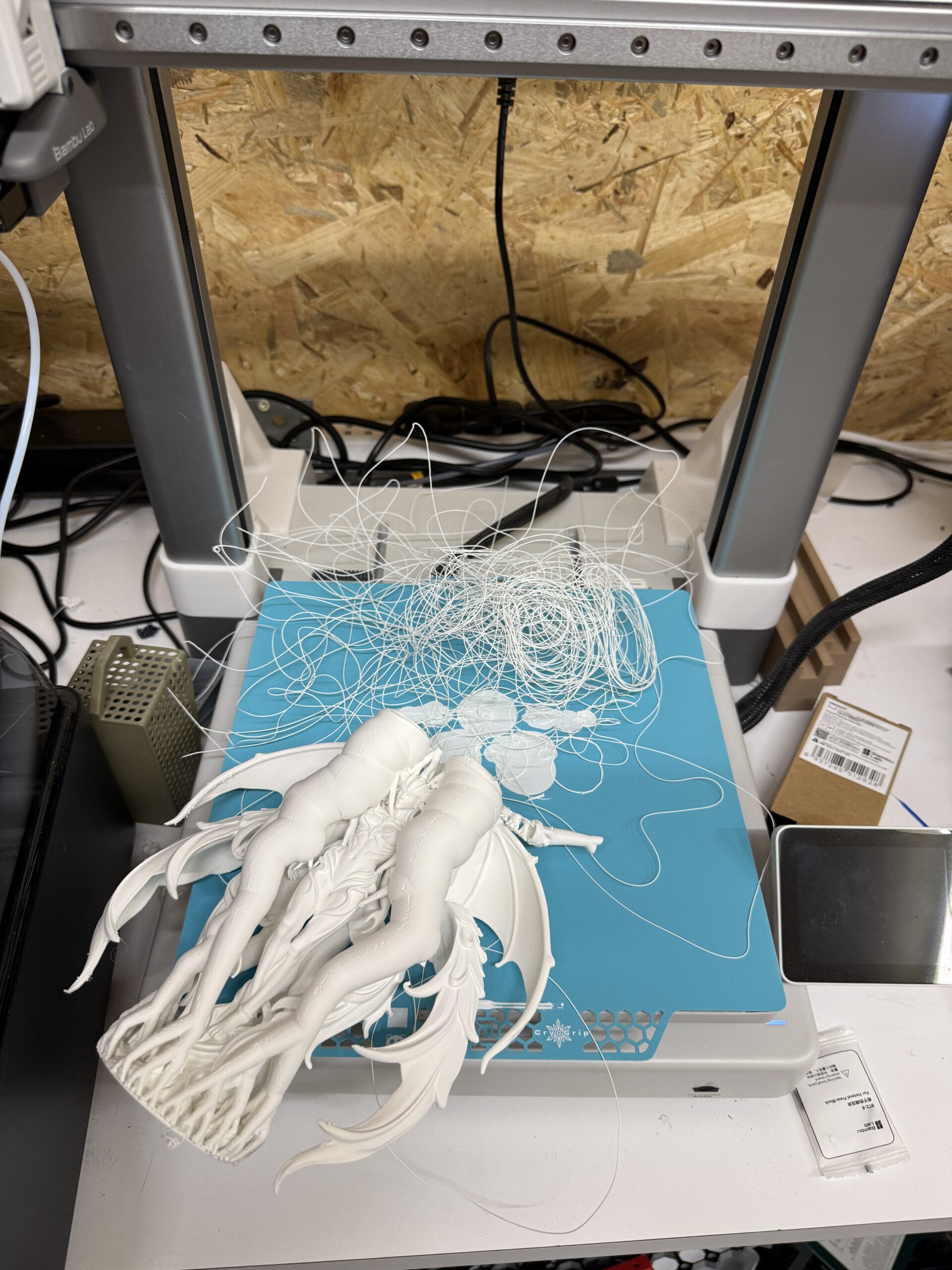
Suggest a topic or ask a questionShow the wins as well as the spaghetti
Bring a failed part for troubleshooting, share a print you are proud of or let us know what your school, club or small business is making. The aim is a friendly local place where people can swap practical knowledge without gatekeeping or sales pressure.
Some things make more sense in person
Use our online guides or contact us by email or text for clear advice on machines, materials, running costs and maintenance. When the physical Saltash showroom opens, in-person comparisons will make the differences tangible.
Contact Layer3D